How to Choose Outdoor Tables for Global Sourcing in 2026?

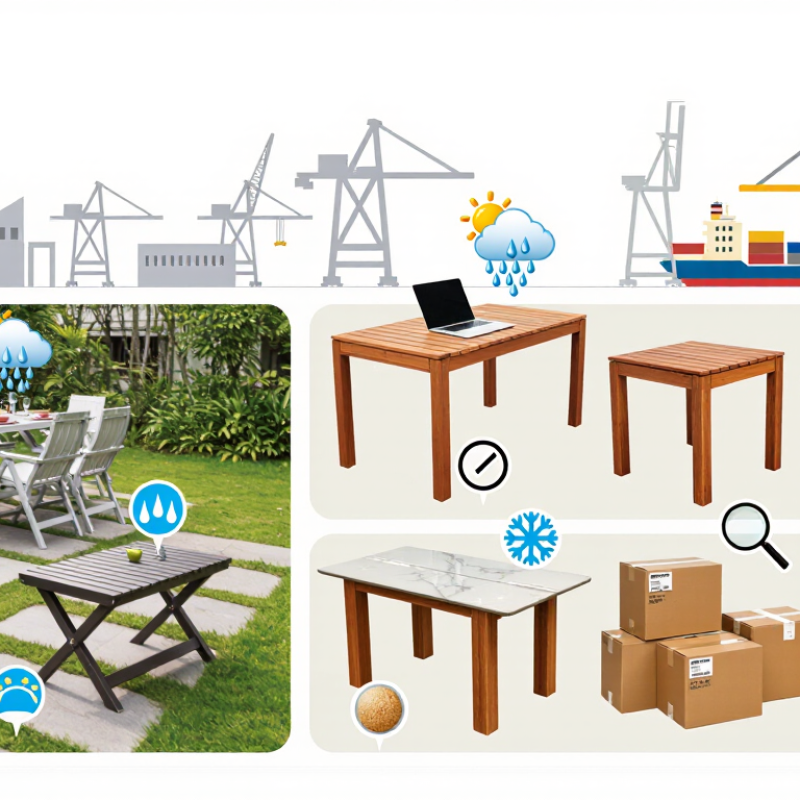
Choosing Outdoor Tables for global sourcing in 2026 requires more than comparing prices and attractive catalogue images. Buyers must examine material performance, supplier capability, testing records, packaging quality, and long-term maintenance needs. An outdoor table may look flawless in a showroom, yet fail after repeated rain, strong sunlight, or freezing temperatures. Small details matter. Check welds, drainage holes, edge finishing, hardware, and tabletop stability.

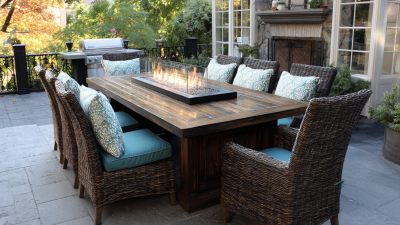
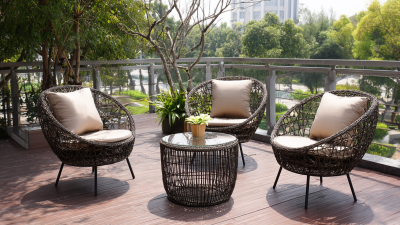
Outdoor-living designer Jamie Durie once said, “The garden is the biggest room in the house.” His observation explains why Outdoor Tables should be selected as functional furniture, not temporary accessories. They must support dining, working, entertaining, and changing weather conditions. Recycled aluminium, treated teak, compact laminate, ceramic, and weather-resistant composites each offer different advantages. The right choice depends on climate, usage frequency, target customers, and expected service life.

Experienced sourcing teams should request material specifications, product samples, factory photographs, inspection reports, and clear tolerance standards. They should also confirm production capacity before placing large orders. A low unit price can become expensive after replacements, damaged shipments, or inconsistent colours. Packaging deserves practical testing, including corner protection and moisture barriers. It is easy to underestimate.

However, no checklist is perfect. A sample may pass inspection while mass production varies slightly. Human oversight remains necessary. Buyers should maintain open communication, document decisions, and review supplier performance after delivery. Responsible sourcing also considers worker safety, traceable materials, and lawful international trade. In 2026, the best Outdoor Tables will balance design appeal, verified durability, responsible production, and realistic cost control.
How to Choose Outdoor Tables for Global Sourcing in 2026?

Forecast 2026 Demand with Regional Growth, Seasonality, and Volume Data

Outdoor table sourcing in 2026 should begin with demand evidence, not attractive catalog photos. Review three signals: regional construction growth, hospitality openings, and replacement cycles. Public import records and distributor sell-through reports can expose differences between forecast and reality. A 12% annual increase in orders may look impressive, yet come from one short project. That growth is not always repeatable. Use a three-year baseline, then separate project volume from recurring demand. Small detail. Big consequence.

Northern Europe may favor compact, weather-resistant tables with late spring demand. Gulf markets can require shaded, heat-tolerant surfaces, with stronger commercial orders before cooler months. Southeast Asian demand may follow resort construction and holiday traffic, while North American purchases often rise before outdoor dining season. These are working assumptions, not guarantees. Compare monthly order history, rainfall, tourism data, and container bookings by region. Use median monthly volume, not one peak month. Add 15–20% safety stock only when lead times justify it.

Forecast each table type separately: folding, stackable, extendable, and fixed contract-grade models. Record diameter, packed cubic meters, weight, material, and pallet count. Volume data changes landed cost quickly. A table that sells well may still lose margin when packaging wastes space. Ask suppliers for carton dimensions from production samples, not estimates. A common sourcing failure occurs when one oversized carton reduces container capacity. That mistake deserves review. Recheck forecasts every quarter against bookings, cancellations, and actual sell-through. Leave room for uncertainty. Weather and construction delays rarely follow spreadsheets.

Specify Safety with EN 581-3 Loads and ISO 4892-3 UV-Aging Data

When sourcing outdoor tables in 2026, treat EN 581-3 loads as a buying specification, not a decorative certificate. Ask for the exact test method, sample dimensions, load points, and failure observations. A table should remain stable when pressure is applied near an edge or corner. It should not develop dangerous cracks, loose joints, or permanent distortion.

Request testing on production-equivalent samples. The frame, fasteners, tabletop, and adjustable feet must match the proposed shipment. A laboratory report is useful, but it cannot replace factory inspection. Check whether the tested table used the same metal thickness, welds, and surface treatment. Small changes can reduce real performance. They often do.

For weather exposure, request ISO 4892-3 data using fluorescent UV-A lamps, such as UV-A 340, with clearly stated irradiance, temperature, condensation, and exposure duration. Record color change, chalking, embrittlement, cracking, and gloss loss after testing. UV-A aging is comparative evidence, not a promise of a specific outdoor lifetime. Sunlight, moisture, salt air, and heat vary by destination. A finish that performs well in a controlled chamber may age faster beside a bright coastal pool. Ask for photographs before and after exposure. Inspectors should also compare several samples, because one attractive result may hide inconsistent production.

Compare Materials Using Density, Recycled Content, and 340-nm UV Data

How to Choose Outdoor Tables for Global Sourcing in 2026?

Material density affects freight cost, stability, and handling. Aluminum weighs about 2.70 g/cm³, while high-density polyethylene typically ranges from 0.94 to 0.97 g/cm³. A recycled plastic tabletop may reduce shipping weight, but its formulation can vary between suppliers. Ask for batch-level density results.

Recycled content needs evidence, not broad claims. The OECD Global Plastics Outlook reports that only 9% of plastic waste was successfully recycled worldwide in 2019. Request third-party verification, production records, and the declared percentage by mass. Recycled feedstock may also increase color variation or surface roughness. That matters under direct sunlight.

UV performance deserves a precise test request. ASTM G154 uses UVA-340 lamps, with a key exposure point near 340 nanometers. One common cycle applies 0.89 W/m²/nm at 340 nm, followed by condensation. Measure color change, gloss loss, cracking, and flexural strength after exposure. Do not treat this as a perfect outdoor-life prediction. Real sunlight, humidity, and heat differ by region.

Ask for ISO 4892-3 or equivalent testing, plus before-and-after photographs. Samples help. One supplier’s impressive panel may hide weak edges, fasteners, or recycled-content inconsistency. A practical mistake is choosing the lightest table first. It may tip, warp, or demand heavier packaging, and the final delivered cost can rise.

Audit Suppliers Against FSC, REACH Limits, MOQ, and Factory Capacity

Outdoor tables require more than attractive samples. Supplier audits should test documents, materials, capacity, and repeatability. An attractive sample proves little.

FSC certification should cover the wood species, factory site, and chain-of-custody certificate. FSC Facts & Figures 2024 reports more than 160 million hectares of certified forests worldwide. Ask for the certificate number and verify its scope. A supplier using certified timber for only one product cannot support every quotation. I have seen paperwork pass while production used mixed, undocumented boards. That gap deserves attention.

REACH screening must cover coatings, plastics, adhesives, and metal finishes. ECHA’s 2022 enforcement project found 18% of inspected products were non-compliant with EU chemical rules. Request recent laboratory reports, test methods, sample dates, and test results linked to the exact model. Old reports create false confidence. Limits can change, and suppliers may substitute materials without notice.

MOQ should match realistic sales forecasts, container efficiency, and storage costs. Do not accept a low MOQ without checking production capacity. Record monthly output, current orders, critical machines, labor shifts, and peak-season lead times. A factory claiming 10,000 tables monthly should show production records, not only a spreadsheet. Review defect rates and on-time delivery for at least three recent orders. No audit is perfect. Capacity estimates still need pressure-testing.

How to Choose Outdoor Tables for Global Sourcing in 2026? - Audit Suppliers Against FSC, REACH Limits, MOQ, and Factory Capacity
Material / Construction Typical Outdoor Use FSC Audit Requirement REACH and Chemical Controls Indicative MOQ for Custom Orders Factory Capacity Evidence Sourcing Decision
Solid FSC-certified hardwood Premium dining tables, hospitality terraces, garden furniture Require a valid FSC Chain of Custody certificate covering the relevant product scope. Verify certificate status, species, claim type, and invoice claim. Check coatings, stains, adhesives, and preservatives against applicable REACH restrictions. Request a current SVHC declaration; communication is required when an SVHC exceeds 0.1% w/w in an article. 100–300 units
Confirm by size, species, and finish.
Review kiln capacity, moisture-control records, finishing-line output, seasonal logs, and production capacity reserved for the program. Suitable for premium programs when legal timber traceability and moisture stability are documented.
FSC-certified plywood or veneer panel Lightweight tops, foldable tables, contract and retail collections FSC documentation must cover the wood-based panel or finished product. Check whether the supplier is authorized to pass through the claimed FSC material. Test or document formaldehyde emissions where required by the destination market. Review resin, edge-band, laminate, and coating ingredients under the REACH framework. 200–500 units
Higher for multiple colors or panel sizes.
Verify panel-supplier continuity, press capacity, CNC throughput, humidity control, and the ability to maintain grain and color consistency. Efficient for volume sourcing if panel traceability and edge-sealing performance are controlled.
Powder-coated aluminum Commercial patios, coastal areas, lightweight residential tables FSC is not applicable to aluminum components. If wood packaging or wood inserts are used, audit those materials separately. Obtain the powder-coating formulation or compliance statement, coating test reports, and declarations for restricted substances. Confirm that intentionally added chemicals are permitted for the intended market. 300–1,000 units
Custom tooling may increase the minimum.
Check extrusion or tube supply, CNC and welding stations, pretreatment, powder-coating line capacity, color-change time, and corrosion-test records. Strong option for low weight and corrosion resistance when pretreatment and coating thickness are consistently monitored.
Stainless steel High-use hospitality, food-service, and coastal applications FSC does not apply to stainless steel. Any FSC claim should relate only to separate wood components or packaging. Request material grade certificates and review surface treatments, passivation chemicals, welding consumables, and coatings for applicable REACH restrictions. 100–300 units
May rise for complex welded frames.
Audit sheet or tube stock, laser or tube-cutting capacity, welding fixtures, polishing equipment, dimensional inspection, and production bottlenecks. Appropriate for demanding environments when grade, weld quality, and surface finish are verified rather than accepted from visual samples alone.
Recycled HDPE or recycled polymer Public spaces, poolside furniture, high-moisture environments FSC is not applicable to polymer materials. Do not accept FSC wording for the table unless a separate certified wood component is clearly identified. Request recycled-content evidence, pigment and additive declarations, and a REACH SVHC statement. Check restrictions for plastic additives, pigments, and articles intended for food-contact use where relevant. 200–600 units
Color and board thickness affect the MOQ.
Review polymer feedstock availability, extrusion or molding output, color consistency, warpage controls, UV-weathering data, and scrap-recycling records. Good for moisture resistance and circularity claims only when recycled content and chemical documentation are independently supported.
Ceramic or sintered-stone tabletop with metal base Upscale outdoor dining, heat-resistant hospitality settings FSC applies only to any separate wood packaging or wood frame, not to the ceramic, stone, or metal tabletop. Check glaze, pigment, adhesive, sealant, and substrate declarations. For products marketed for food contact, obtain the additional food-contact documentation required by the destination market. 100–300 units
Packaging and breakage allowances must be included.
Verify slab or tile supply, cutting and edge-finishing throughput, flatness control, impact testing, protective packaging, and replacement-part capability. Suitable for premium use when breakage rates, packaging validation, and replacement logistics are included in the landed-cost model.
Mixed-material table Modular ranges combining wood, metal, glass, or polymer Audit FSC claims component by component. The finished-product claim must match the supplier's certified scope and transaction documentation. Build a component-level chemical file covering paint, powder coat, adhesive, sealant, plastic parts, textiles, and packaging. Obtain an updated SVHC communication statement. 300–800 units
Set separate minimums for critical components.
Confirm synchronized capacity across sub-suppliers, incoming inspection, assembly balancing, change-control procedures, and contingency sources for long-lead parts. Select only when the supplier can provide a single traceable compliance pack and demonstrate control of all outsourced processes.
Any outdoor table configuration Global retail, hospitality, and project sourcing Verify certificate validity directly through the relevant certification database or certification body. FSC status alone does not prove that every purchased item is certified. Keep a product technical file with bills of materials, test reports, supplier declarations, restricted-substance assessments, and corrective-action records. Recheck changes in formulation or component suppliers. Commercially negotiated
Use forecast volumes, tooling, packaging, and reorder terms.
Compare monthly rated capacity with confirmed orders, utilization, lead time, labor availability, maintenance downtime, quality yield, and peak-season commitments. Approve only after document review, sample validation, factory audit, capacity review, and a written corrective-action deadline for open findings.
Planning note: MOQ ranges are indicative sourcing benchmarks, not regulatory limits. Confirm final MOQs, capacity, FSC scope, REACH status, testing requirements, and destination-market obligations with the selected supplier before purchase approval.

Model Landed Cost with 40-Foot HC Space (~76 m³), Duties, and Incoterms

When sourcing outdoor tables in 2026, model the container before comparing factory prices. A 40-foot high-cube container provides about 76 m³ of internal volume. Carton dimensions decide the real quantity. A 120 × 80 × 15 cm carton uses 0.144 m³, giving a theoretical capacity of 527 cartons. Pallets, door clearance, and uneven stacking can reduce this to roughly 430–470 cartons. My first spreadsheet ignored those losses. It looked precise, but it was not.

Landed cost should include product value, export handling, ocean freight, insurance, destination charges, customs clearance, duties, inland delivery, and inspection. For each table, use this formula: total delivered cost divided by sellable units. Duties require the correct HS classification and origin rules. Rates vary significantly between importing countries. The WTO World Tariff Profiles 2024 confirms that tariff treatment differs by product category and market. Incoterms do not set duty rates. They only allocate transport costs, risks, and responsibilities. Under FOB, the buyer normally controls the main freight. Under DDP, the seller manages delivery and import formalities, where legally permitted.

Freight needs a dated quotation, not a hopeful allowance. UNCTAD’s Review of Maritime Transport 2024 states that ships carry over 80% of global merchandise trade by volume. Disruptions can quickly change the ocean component. Request both a per-container quote and a per-unit calculation. Add a 5–10% contingency for currency movement, remeasurement, and port fees. It may still be imperfect, but hidden assumptions become visible.