How to Choose the Best Mens Heated Sweatshirt?

Cold mornings expose the weaknesses of ordinary winter clothing. A jacket may block wind, yet leave your lower back and chest uncomfortably cold. A Mens Heated Sweatshirt adds targeted warmth through integrated heating zones, usually powered by a rechargeable battery. It can feel practical during commuting, outdoor work, camping, or watching a late game.

Market research reflects growing interest in heated apparel. Grand View Research’s Heated Clothing Market Size, Share & Trends Analysis Report identifies rising demand for wearable warmth, especially in outdoor recreation and cold-weather work. Fortune Business Insights also forecasts continued growth in the global heated clothing market through the next decade. However, market growth does not guarantee product quality. Estimates differ because reports classify heated vests, jackets, socks, and sweatshirts differently.

Choosing well requires more than checking the highest temperature setting. Consider heating-zone placement, battery capacity, charging time, fabric weight, and washability. A sweatshirt with chest and back panels may distribute warmth better than one with a single front element. Look for clear safety instructions and tested electrical components. UL Solutions explains that recognized standards can help evaluate products involving batteries, wiring, and heat-producing systems, although certification details vary by product and market.

Comfort matters just as much as technical specifications. A heavy battery can pull at the waistband. Tight cuffs may trap heat but restrict movement. Some advertised runtimes also rely on the lowest setting. That detail is easy to miss. The best Mens Heated Sweatshirt should match your activity, climate, body fit, and tolerance for charging routines. No single model suits everyone, and even strong product reviews cannot replace careful personal testing.
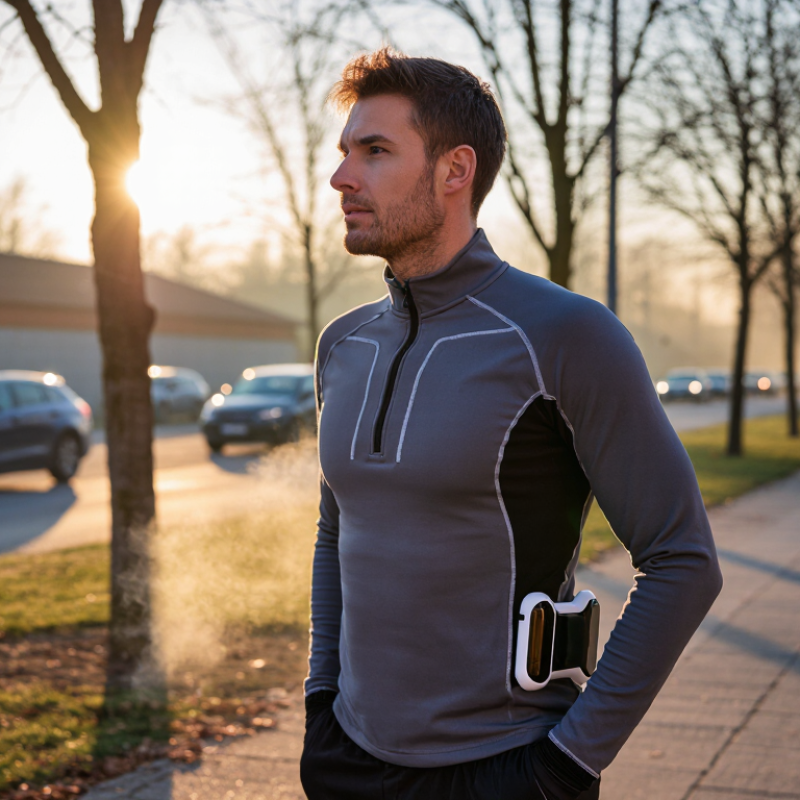
How to Choose the Best Mens Heated Sweatshirt?

Define Your Warmth Needs and Intended Use

How to Choose the Best Mens Heated Sweatshirt?

Define Your Warmth Needs and Intended Use

Start with the situation, not the heating controls. A sweatshirt for winter commuting faces different demands than one for outdoor work. During a recent cold morning walk, I needed steady warmth across my chest and back. My hands still felt cold because the sleeves offered little insulation. That detail changed how I judged the garment.

Consider your usual temperature, activity level, and exposure time. Light walking creates body heat, while standing outdoors for hours does not. For mild chills, one heated zone may be enough. For prolonged exposure, adjustable chest, back, and sleeve heating can feel more practical. Keep the setting low while moving. Use higher heat during pauses. Battery life often falls quickly at maximum power.

Fit matters more than many buyers expect. The heating panels should sit close to your body, but the sweatshirt must allow a thin base layer underneath. A loose fit may reduce heat transfer. A tight fit can restrict movement and flatten insulation. I once chose a larger size for comfort and found the warmth less noticeable. That was a useful mistake.

Check the battery placement before buying. It should not press against your hip while sitting or driving. Review washing instructions carefully, and remove the battery before cleaning. Look for clear temperature controls and reliable stitching around the wiring. Heat ratings are not universal, so test the garment gradually and stop using it if the fabric becomes uncomfortably hot.

Compare Heating Zones, Temperature Levels, and Heat Distribution

Choosing the best men’s heated sweatshirt starts with its heating zones. Chest panels warm the torso quickly, while back panels help during long outdoor sessions. Some designs also heat the shoulders or pockets. I prefer balanced coverage over one powerful panel because heat can otherwise feel concentrated and uncomfortable. Check the panel placement while sitting, walking, and reaching.

Temperature levels matter just as much. A useful sweatshirt should offer low, medium, and high settings. Low heat suits indoor work or mild evenings. Medium heat works well around 5–10°C, depending on wind and clothing layers. High heat can help during short, cold tasks, but it may drain the battery faster. Do not judge controls by numbers alone. Test how quickly each setting responds.

Heat distribution is easy to overlook. A sweatshirt may have several zones but still leave cold areas near the sides or lower back. Look for flexible panels that stay close to the body without restricting movement. Even fabric tension helps heat spread more consistently. I once chose a garment with impressive maximum heat, yet its sleeves stayed cold. That experience changed my priorities. More power is not always better.

Read the care instructions carefully. Moisture, fit, and battery placement can affect performance. A close but comfortable fit usually improves contact with the heating panels. However, sizing charts are not perfect, so allow room for a base layer and natural movement.

How to Choose the Best Men's Heated Sweatshirt? - Compare Heating Zones, Temperature Levels, and Heat Distribution

Heating Configuration Typical Heating Zones Temperature Levels Typical Surface-Temperature Range Heat Distribution Approximate Runtime at Medium Heat Best For
Basic 3-Zone System Upper back, left chest, right chest Usually 3 levels: low, medium, high Approximately 38–55°C (100–131°F) Focused warmth across the torso; limited side and lower-back coverage About 4–8 hours, depending on battery capacity and temperature setting Daily commuting, light outdoor activity, and occasional cold-weather use
Balanced 5-Zone System Upper back, lower back, left chest, right chest, abdomen Usually 3 levels; some designs offer 4 levels Approximately 38–60°C (100–140°F) More even front-and-back warmth with improved core coverage About 3–7 hours, depending on battery capacity and temperature setting General outdoor work, hiking, camping, and cool-weather travel
Extended 7–9-Zone System Chest, upper back, lower back, abdomen, side panels, and sometimes collar or pockets Usually 3 levels with independent or grouped zone control Approximately 38–60°C (100–140°F) Broad coverage with fewer cold spots around the torso and waist About 2.5–6 hours, depending on the number of active zones and battery capacity Prolonged exposure to cold, stationary outdoor work, and winter recreation

Key Selection Factors

Factor What to Look For Why It Matters
Heating Zones At least chest and upper-back zones for basic warmth; add lower-back and side zones for more complete coverage More zones can reduce cold spots, but they may increase power consumption and garment cost
Temperature Control Three clearly separated settings such as low, medium, and high; independent zone control is an added advantage Multiple settings make it easier to balance comfort, weather conditions, and battery life
Heat Distribution Heating elements positioned close to the torso, with even spacing and minimal gaps between zones Placement often affects perceived warmth more than the total number of heating elements
Battery Performance A removable rechargeable battery with stated capacity, charging time, and protection against overcharging Runtime varies significantly with temperature level, active zones, ambient temperature, and battery capacity
Fabric and Fit A close but non-restrictive fit, insulating fabric, stretch panels, and moisture-management properties Good contact helps transfer heat, while insulation helps retain it without excessive bulk
Safety and Care Automatic shutoff or temperature regulation, protected wiring, and clear washing instructions with the battery removed These features help reduce overheating risk and protect the electrical components during care and use
Note: Temperature ranges and runtime figures are typical industry ranges for rechargeable heated apparel. Actual performance varies by garment design, battery capacity, ambient temperature, clothing layers, and selected heat level.

Evaluate Battery Life, Charging Options, and Power Safety

How to Choose the Best Mens Heated Sweatshirt?

Battery life matters most when cold weather keeps you outdoors for hours. A compact battery may last three hours on high heat, but eight hours on low heat. Check the stated runtime for each setting, not only the maximum figure. Heat output, outside temperature, and washing habits can change performance. In real-world use, cold batteries often drain faster. A perfect runtime claim is unrealistic.

Charging options should fit your routine. A removable battery with a standard USB-C port is convenient during travel and office use. However, a dedicated charger may provide steadier charging and clearer status indicators. Check whether the sweatshirt includes overcharge protection, temperature control, and short-circuit safeguards. Never use a damaged cable. Small detail, major risk.

Inspect the battery pocket before every winter outing. It should hold the battery firmly without bending the connector. Keep the battery dry, especially during snow or light rain. Do not charge it while wearing the sweatshirt unless the instructions clearly permit it. Avoid charging overnight on soft bedding, where heat can build up. Stop using the battery if it swells, smells unusual, or becomes hot quickly. I sometimes prioritize longer runtime over comfort, but that choice deserves reconsideration. Safety should not become an afterthought.

Check Fit, Fabric Quality, Comfort, and Ease of Movement

Choosing the best men’s heated sweatshirt starts with fit, not the heating setting. Measure your chest and compare it with the garment’s size chart. The shoulders should sit flat, while the sleeves must cover your wrists during movement. A loose body allows heat to escape. A tight chest can restrict breathing and layering. Try reaching forward, driving, and lifting your arms. If the hem rides upward, the cut needs reconsideration.

Fabric quality controls comfort over time. Textile Exchange’s Materials Market Report 2024 reported polyester made up about 57% of global fiber production in 2023. Polyester can dry quickly, but it may trap odor without proper finishing. Look for a soft inner layer, smooth seams, and breathable panels near the sides. The fabric should feel warm, not clammy. Small detail, big difference. Also check washing instructions carefully. Repeated washing can affect stretch, insulation, and heating components.

Ease of movement deserves a practical test. ASTM F2732 uses thermal manikin data to classify clothing insulation, but laboratory ratings cannot predict every outdoor experience. Wind, sweat, posture, and personal tolerance change the result. Bend your elbows fully and rotate your torso before buying. The heating zones should stay close to your core without pressing painfully. A lower setting may feel better during active use. I would not trust a sweatshirt that feels impressive for five minutes but stiffens after an hour. Comfort is personal, and even careful sizing can be imperfect.

Review Washing Instructions, Durability, Warranty, and Overall Value

How to Choose the Best Men’s Heated Sweatshirt?

Washing instructions reveal more than comfort claims.

Read the label. Before washing, remove the battery and inspect every connector. Use a cold, gentle cycle unless the care guide permits warmer water. Avoid bleach, fabric softener, and high heat, which can weaken fibers and damage heating elements. Air-drying is usually safer than tumble-drying. This small routine protects both performance and appearance.

Durability deserves practical checking.

Look for reinforced seams, flexible heating zones, secure cable pockets, and abrasion-resistant fabric. ASTM D4966, the Martindale abrasion method, is widely used to assess textile wear, but a test result does not guarantee real-world longevity. I would still examine stitching after several washes.

Textile Exchange’s Materials Market Report 2024 places global fiber production at about 124 million tonnes in 2023, showing why longer garment use matters. More durable clothing can reduce replacement demand.

Warranty terms should clearly cover the heating system, battery, charger, and labor.

Check exclusions for washing mistakes, normal fabric wear, and battery aging. Keep receipts. A two-year warranty sounds strong, yet limited battery coverage may reduce its real value.

WRAP’s Valuing Our Clothes research found that extending clothing life by nine months can reduce carbon, water, and waste footprints by around 20–30 percent.

That figure is useful, but personal washing habits still decide the outcome. Fancy features are not always better. Judge cost against comfort, repair support, usable battery life, and care effort.