Choosing an activated carbon filter sheet supplier is more complex than comparing prices online. Sheet color can look similar, while adsorption capacity, airflow resistance, and binder quality differ significantly. This guide introduces ten suppliers that deserve consideration for industrial, commercial, and specialized air filtration projects.
The evaluation focuses on practical purchasing evidence. Important details include carbon type, iodine value, sheet thickness, pressure drop, humidity performance, and cutting accuracy. Supplier experience also matters when a project needs stable monthly output rather than one successful sample. Reliable manufacturers should provide technical data sheets, batch records, test results, and clear information about minimum order quantities.
A sample can reveal useful facts. Under a workshop light, uneven edges may suggest poor processing. During testing, excessive dust release can indicate weak bonding. Those small observations often matter more than polished product photographs. Certifications and laboratory reports should still be checked independently, especially for food, medical, or cleanroom applications.
This list is not a permanent verdict. Markets change, product grades vary, and one supplier may fit a ventilation project but fail a solvent-control application. That distinction deserves attention. Buyers should request current samples and confirm performance under real temperature, humidity, and airflow conditions. Cost comparisons should include shipping, replacement frequency, packaging, and technical support. The strongest supplier is not always the largest. It is the one that documents its process, communicates limitations honestly, and delivers consistent activated carbon filter sheet quality over time. Mistakes remain possible, so careful validation is essential.
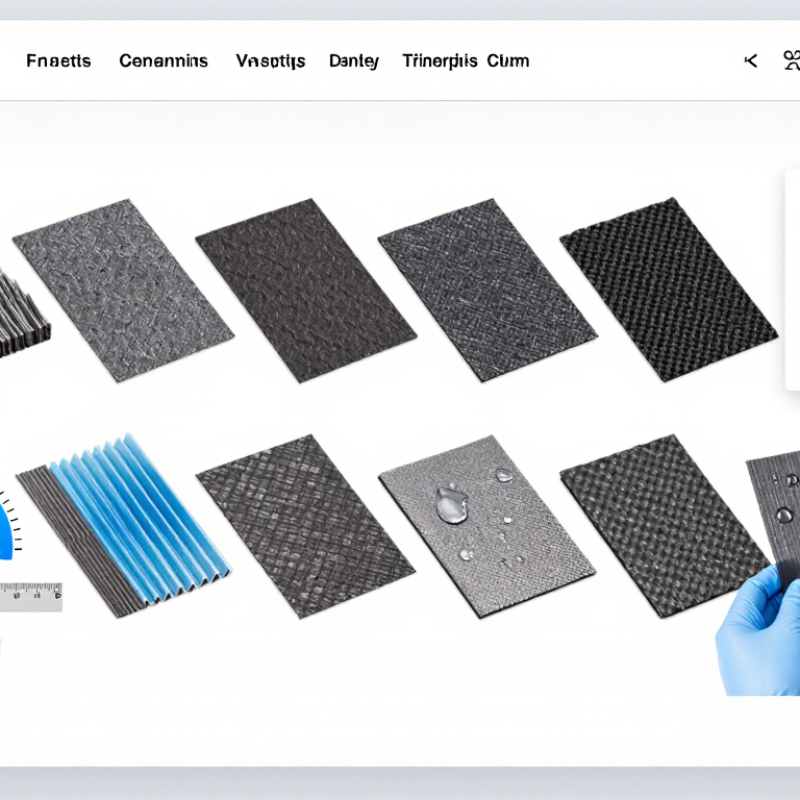
activated carbon filter sheets combine a porous support layer with carbon media and a controlled binder system. The support may use cellulose, synthetic fibers, or a blend of both. It gives the sheet strength during cutting, folding, and installation. Carbon particles provide adsorption sites for odors, chlorine, and many dissolved organic compounds. The structure also affects pressure drop, dust release, and service life.
Common media types include powdered activated carbon, granular carbon, and carbon fiber composites. Powdered carbon offers broad contact coverage and suits thin sheets. Granular media can provide deeper adsorption but may increase thickness and resistance. Carbon fiber structures often support fast airflow, although their capacity can vary. In practice, pore size, iodine value, humidity tolerance, and binder content deserve close inspection. A darker sheet is not automatically better.
These sheets appear in HVAC prefilters, kitchen exhaust systems, cleanroom air handling, and selected water-treatment cartridges. They can reduce odors near workshops, storage rooms, and food-processing areas. Water applications require careful testing for flow rate, contact time, and target contaminants. A supplier should provide batch data, pressure-drop curves, material safety information, and dimensional tolerances. Ask for samples. Visual checks can miss uneven carbon distribution, weak edges, or shedding after vibration. One practical mistake is judging performance from odor alone; human perception is inconsistent, and laboratory testing remains necessary.
Activated carbon filter sheets rely on adsorption, not simple straining. Their porous carbon surface attracts dissolved organic compounds. Iodine value measures adsorption capacity for relatively small molecules. ASTM D4607 reports this value in milligrams per gram of carbon. In commercial carbon media, values commonly range from 500 to 1200 mg/g. Higher numbers can indicate more microporosity. They do not guarantee better removal in every liquid.
A 2023 technical review from the International Water Association links carbon performance with pore structure, contact time, and surface chemistry. AWWA B600-23 also treats iodine number as one quality indicator, rather than a complete specification. This matters when comparing sheet suppliers. A sheet with 1000 mg/g iodine value may perform poorly if the target contaminant is too large. Moisture, binder content, pressure loss, and extractables can change field results. Laboratory claims can look cleaner than real operation.
Tips
Ask for ASTM D4607 test conditions, carbon loading, and finished-sheet pressure-drop data. Request independent batch testing when possible. Compare removal data using your actual water or process liquid. Do not select a supplier by iodine value alone. That shortcut is tempting, but incomplete. Supplier documentation should also identify pore-size distribution, thickness tolerance, and service-life testing. Some specifications remain unclear, and buyers should challenge them before approval.
Choosing among the top 10 activated carbon filter sheet suppliers requires more than comparing catalog prices. Production capacity should match your actual demand, not an impressive annual figure. Ask for monthly output, available forming lines, standard lead times, and backup production plans. A supplier producing 500,000 sheets monthly may still struggle with a sudden 30% increase.
Certification checks must fit the application. ISO 9001 can support quality management, while ISO 14001 indicates stronger environmental controls. For drinking water or food-contact use, request relevant safety documentation and current test reports. Verify certificate numbers, issuing bodies, and expiration dates. A polished certificate is not enough.
Sheet specifications reveal practical performance. Compare thickness, width, length, basis weight, carbon loading, iodine value, methylene blue value, and pressure drop. Also review airflow resistance at the intended velocity. Binder type matters because weak binders can shed particles during handling.
Request samples from three production lots, not one perfect sample. Check flatness, edge strength, odor, moisture, and adsorption results after storage. Small variations can become costly in assembled filters. I would also question unusually high performance claims; test methods may differ. The supplier with the largest capacity is not always the most reliable choice. Consistent records, transparent sampling, and realistic delivery promises deserve greater weight.
Top 10 Activated Carbon Filter Sheet Suppliers?
Supplier quality is easier to judge through test details than catalog claims. Pressure drop should be reported at a defined airflow, temperature, and humidity. A sheet showing 80 Pa at 2.5 m/s cannot be compared fairly with one tested at 1.5 m/s. ASHRAE Handbook—HVAC Applications (2023) identifies face velocity, contact time, humidity, and contaminant concentration as major factors in gas-phase filtration. Even a small pressure increase can raise fan energy and reduce system airflow.
Efficiency also needs a clear target gas. Iodine number alone does not predict performance against every odor or vapor. ISO 10121-1:2014 provides a framework for testing gas-phase air-cleaning devices, including challenge concentration and breakthrough behavior. The US EPA’s Residential Air Cleaners Technical Summary also warns that particle ratings do not measure gas removal. Service life should therefore show breakthrough time, carbon loading, and replacement conditions. A supplier claiming “long life” without these figures is difficult to verify. In practice, humidity can shorten life sharply. This is often underreported.
Tips: Request raw test curves, not only one efficiency percentage. Check pressure drop after dust loading. Ask for results at your actual airflow and humidity. Compare usable carbon mass per sheet, not just sheet thickness. A 5 mm sheet may contain less active carbon than a thinner, denser design. I would also require batch traceability and accelerated aging data. These checks take time, but vague datasheets cost more later.
Anonymized benchmark comparison of pressure drop, VOC adsorption efficiency, and estimated service life under comparable test conditions.
Lower pressure drop indicates easier airflow, while higher efficiency and longer service life indicate stronger overall performance. Values are representative industry benchmark figures; actual results vary with carbon loading, target contaminant, airflow, humidity, and operating conditions.
Top 10 Activated Carbon Filter Sheet Suppliers?
Choosing among ten suppliers requires more than comparing catalog prices. In practical sourcing, I check the sheet’s carbon loading, thickness, airflow resistance, and adsorption data. A low price can hide unstable density or excessive pressure drop. Ask for recent test reports, not only a polished product brochure. Small details matter.
ASTM references should match the exact test method and product claim. Confirm whether the supplier provides batch-level records, dimensional tolerances, and material traceability. ISO 9001 certification shows a quality management system, but it does not guarantee every sheet performs equally. Request the certificate scope and current validity. Also review compliance documents for your destination market, including material declarations and restricted-substance statements.
MOQ and lead time often decide whether a supplier is genuinely suitable. Ask whether the quoted MOQ applies to one size, one carbon grade, or a mixed order. Confirm sample timing, production capacity, packaging, and shipping terms in writing. A realistic supplier should explain delays instead of promising impossible dates. I prefer a small trial order before committing to regular volumes. It may cost more initially. Still, this exposes curling, odor, weak edges, or inconsistent airflow early. A checklist can miss these handling problems, so record inspection results with photos and batch numbers.
| Rank | Supplier Reference | Typical Product Format | Typical Thickness | Typical Activated Carbon Loading | Applicable ASTM Test Basis | ISO 9001 Evidence to Request | Compliance Documents to Request | Indicative MOQ | Indicative Lead Time | Sample Policy | Buyer Verification Priority |
|---|---|---|---|---|---|---|---|---|---|---|---|
| 1 | Supplier Reference 01 | Nonwoven activated carbon filter sheet | 3–10 mm | 30–150 g/m² | ASTM D2862 for iodine number where applicable; supplier-specific sheet performance data required | Current certificate, issuing body, scope, and validity date | REACH and RoHS declarations; SDS; lot traceability; food-contact statement if relevant | 500–1,000 m² | 3–6 weeks after approved specification | Usually available | Confirm adsorption capacity and pressure-drop test method |
| 2 | Supplier Reference 02 | Carbon-loaded polyester or polypropylene sheet | 2–8 mm | 20–120 g/m² | ASTM D2854 for apparent density of carbon where applicable; product-specific airflow testing required | Certificate must cover manufacturing and quality-control activities | REACH, RoHS, SDS, technical data sheet, and restricted-substance declaration | 300–800 m² | 4–8 weeks | Usually available | Check fiber basis weight, carbon retention, and delamination resistance |
| 3 | Supplier Reference 03 | Activated carbon felt or flexible filter media | 2–6 mm | 100–400 g/m² | ASTM D4607 for iodine number may be used for powdered or granular carbon; confirm applicability to the finished media | Verify certificate scope, production site, and surveillance status | SDS, REACH, RoHS, material composition, and application-specific regulatory statement | 100–500 m² | 5–9 weeks | Usually available | Validate tensile strength, dust shedding, and odor-removal performance |
| 4 | Supplier Reference 04 | Carbon-impregnated cellulose filter paper | 0.5–3 mm | 10–80 g/m² | ASTM D2862 or D4607 may characterize the carbon; finished-sheet efficiency must be tested separately | Request a certificate matching the exact manufacturing location | REACH, RoHS, SDS, pulp-source declaration, and food-contact documentation when required | 1,000–3,000 m² | 4–7 weeks | Usually available | Confirm wet strength, burst strength, and carbon migration limits |
| 5 | Supplier Reference 05 | Composite pre-filter and activated carbon sheet | 4–12 mm | 40–200 g/m² | ASTM D737 may be relevant for air permeability; use a validated finished-product test method | Verify current certification and scope for filter-media production | REACH, RoHS, SDS, VOC or odor test report, and batch inspection record | 500–1,500 m² | 6–10 weeks | Usually available | Compare pressure drop, particulate pre-filtration, and service life |
| 6 | Supplier Reference 06 | Needle-punched nonwoven carbon media | 5–15 mm | 50–250 g/m² | ASTM D5734 or another validated surface-area method may characterize carbon; confirm laboratory method | Request certificate number, expiry date, and audit or surveillance evidence | REACH, RoHS, SDS, fiber composition, and product conformity declaration | 800–2,000 m² | 6–12 weeks | Case-by-case | Check thickness tolerance, compression recovery, and edge integrity |
| 7 | Supplier Reference 07 | Activated carbon laminate or pleatable sheet | 1–5 mm | 25–130 g/m² | ASTM D737 for airflow may be relevant; request finished-media efficiency and pressure-drop data | Confirm the certificate applies to lamination and converting operations | REACH, RoHS, SDS, adhesive composition, and thermal or chemical resistance data | 300–1,000 m² | 5–10 weeks | Usually available | Verify pleatability, adhesive stability, and carbon exposure area |
| 8 | Supplier Reference 08 | High-loading activated carbon board or rigid sheet | 5–20 mm | 150–600 g/m² | ASTM D2854 and D2862 may support carbon characterization; finished-board testing remains necessary | Request scope, site address, validity, and certificate authenticity check | REACH, RoHS, SDS, fire-performance data, and emissions declaration where applicable | 100–500 sheets | 7–12 weeks | Case-by-case | Evaluate rigidity, dust generation, saturation behavior, and disposal requirements |
| 9 | Supplier Reference 09 | Medical or laboratory-grade carbon filter sheet | 1–6 mm | 20–150 g/m² | Use validated application-specific testing; ASTM carbon tests alone do not establish medical suitability | Confirm certificate scope and quality-system controls for the intended application | SDS, REACH, RoHS, biocompatibility or food-contact evidence where applicable, and lot traceability | 200–1,000 m² | 6–12 weeks | Pre-approval required | Define regulatory pathway, sterilization compatibility, and extractables limits |
| 10 | Supplier Reference 10 | Custom die-cut activated carbon filter sheet | Customer specification | Customer specification | ASTM test selection depends on carbon type and end use; require an agreed inspection plan | Request certification for both sheet production and converting operations | REACH, RoHS, SDS, drawing approval, first-article report, and change-control procedure | 1,000–5,000 pieces | 8–14 weeks for new tooling or qualification | Pre-approval required | Lock tolerances, tooling ownership, packaging, and engineering-change notification |