China Top Private Label Makeup Manufacturers?
Choosing among China’s Private Label Makeup Manufacturers requires more than comparing prices or browsing polished product photos. The right partner should explain its formulation capabilities, ingredient sourcing, minimum order quantities, production timelines, and quality checks in clear terms. Ask to see samples. Compare shade consistency, texture, scent, packaging fit, and how products perform after repeated use. Small details matter.
Cosmetic chemist and educator Perry Romanowski is a useful expert reference for evaluating product claims. His guidance can be summarized as: “Assess a formula by its ingredients, evidence, and intended use—not by its marketing alone.” Treat this as a practical summary, not a verified verbatim quotation. That distinction matters. A manufacturer’s confident sales language is not a substitute for product specifications, sample review, and documented quality procedures.
This guide will help brands assess Chinese suppliers by looking at product range, customization, communication, manufacturing experience, and transparency. Some factories specialize in lip color; others offer complexion products, eye makeup, or broader collections. The best fit depends on your brief. Request written details about available formulas, packaging options, sample fees, production capacity, and batch-level quality controls. Then compare answers, not just catalogues. A low quote can hide costly compromises. A beautiful sample can also differ from a later production run. Verify the details before committing. The goal is not to crown one factory for every brand. It is to identify a capable partner whose strengths, process, and communication fit your product plans.
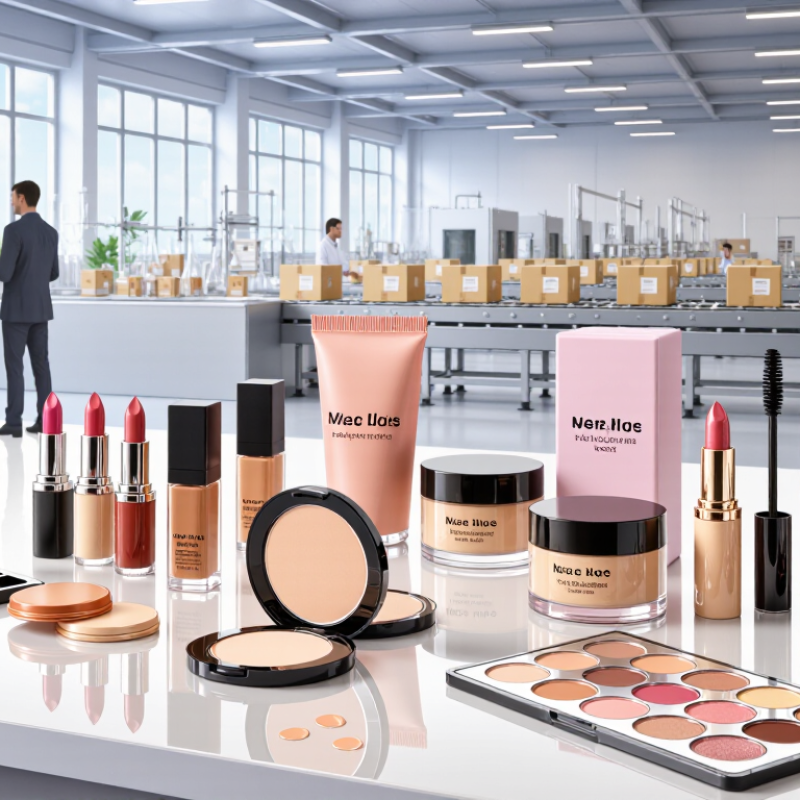
What Private Label Makeup Manufacturing Means in China
Private label makeup manufacturing in China means working with a factory to develop products sold under your own brand. Depending on the supplier, you may choose an existing formula, adjust its texture or shade, or develop a product from a detailed brief. The factory may also help source packaging, fill containers, and coordinate quality checks. The exact scope varies, so confirm which services are handled in-house and which depend on outside partners.
A practical project begins with clear product requirements: finish, shade range, package size, target order volume, and intended price. Then review samples for color consistency, scent, texture, and how the product performs after opening. Ask how batches are checked and what records are available for ingredients, packaging, and production. Small details matter. A cap that feels loose or a shade that shifts under daylight can affect the finished product. A polished sample can still differ from bulk production, so request a production sample when possible. Timelines and minimum quantities also deserve careful discussion. Some details may change during development; document decisions and review them before production begins.
How China’s Makeup Manufacturing Sector Is Organized
China’s makeup manufacturing sector is better understood as a connected network than a row of standalone factories. Some businesses develop formulas and manage production, while others specialize in packaging, component sourcing, filling, or quality checks. A private-label project may involve several of these partners. The factory name alone does not show who controls each step.
Larger manufacturers may offer in-house development, filling lines, and packaging coordination. Smaller specialists can focus on particular product types or production stages. Around them are suppliers of jars, palettes, brushes, pigments, and printed cartons. Export agents may coordinate communication and shipping, but they are not necessarily the manufacturer. This structure can improve flexibility. It can also make responsibility harder to trace when specifications change. The map is useful, but imperfect.
Tips: Ask which site makes and fills the product, and who approves formula or packaging changes. Request current facility and testing records, plus clear written specifications. Check how samples compare with production batches. Small details matter. A slightly different shade or loose compact hinge may reveal gaps in process control. Don’t assume a polished sample guarantees consistent production.
China’s private-label makeup supply chain typically links product development, sourcing, production, quality control, compliance documentation, and export logistics. The equal-length bars show workflow stages, not market share, factory counts, or measured output.
Which Capabilities Set Leading Manufacturers Apart
Leading private-label makeup manufacturers stand out through disciplined development, not simply a large product catalog. Their teams can explain how pigment load affects coverage, or why a cream formula drags across dry skin. They also ask specific questions about the intended user, finish, and packaging before proposing a formula. Details matter.
Reliable production depends on repeatable checks. A capable manufacturer compares shade samples under consistent lighting, records formula adjustments, and checks that each batch matches approved standards. Stability testing can reveal changes in texture, scent, or color over time. Packaging tests matter too: a leaking tube can undermine an otherwise well-made product. Ask how results are documented, and what happens when a batch falls outside agreed limits.
Clear communication is another important capability. Strong teams provide realistic timelines, explain minimum order quantities, and flag sourcing or production constraints early. They should also supply accurate ingredient and product documentation for review by the client’s qualified compliance professionals. No test removes every uncertainty. Even experienced teams may need several rounds to match a shade across different skin tones, and that can delay launch plans. A manufacturer’s response to such setbacks often reveals more than a polished sample.
How Brands Develop and Launch Private Label Makeup in China
Developing private label makeup in China starts with a clear product brief, not a catalog. Define the customer, target price, finish, shade range, and expected order volume. For a lipstick, specify the texture, fragrance preference, bullet shape, and packaging dimensions. Clear details help manufacturers assess feasibility and quote more accurately. Small details matter.
Request samples before approving a formula. Check shades in daylight and indoor lighting, then test the product across several days. A shade can look right on a screen and different on skin. Not every sample works. Ask about revision rounds, minimum order quantities, sample fees, and realistic production timelines. Review packaging fit, too: a loose cap or leaking tube can undermine an otherwise good product.
Before placing an order, confirm formula specifications, ingredient documentation, quality checks, batch traceability, and testing appropriate for the intended market. Put responsibilities, payment milestones, defect handling, and delivery terms in writing. A small pilot order can reveal issues with color consistency or packaging before a larger run. Leave time for corrections; launch schedules often look tidy on paper, but production details can shift.