Why Choose an Umbrella Folding Pram for Your Baby?
Choosing an Umbrella Folding Pram can make everyday trips feel simpler, especially when storage space is limited. Its compact fold may fit beside a hallway cupboard, in a car boot, or on public transport. The lighter frame can also be easier to lift when you are carrying a changing bag or helping an older child. Small details count.
Still, a compact design is not automatically right for every family. Before choosing one, consider where you will use it most: crowded pavements, smooth shopping-centre floors, or uneven paths. Check the manufacturer’s age and weight guidance, and look closely at the harness, brakes, folding latch, and seat support. A pram that feels convenient in a shop should also feel secure and manageable in your usual routine. Try folding and unfolding it yourself, if possible. That tells you more than a product photo.
This article explores the practical advantages of an Umbrella Folding Pram, including portability, storage, and day-to-day handling, while noting the compromises. Smaller wheels may feel less comfortable on rough ground, and a lighter frame may offer less room for shopping or accessories. Those details are easy to overlook. Think about your baby’s comfort, your own height, and how often you will carry the pram. There is no perfect model for everyone. A little reflection before buying can help you choose a pram that suits real outings, not just an idealised routine.
What Defines an Umbrella Folding Pram?
Why Choose an Umbrella Folding Pram for Your Baby?
What Defines an Umbrella Folding Pram?
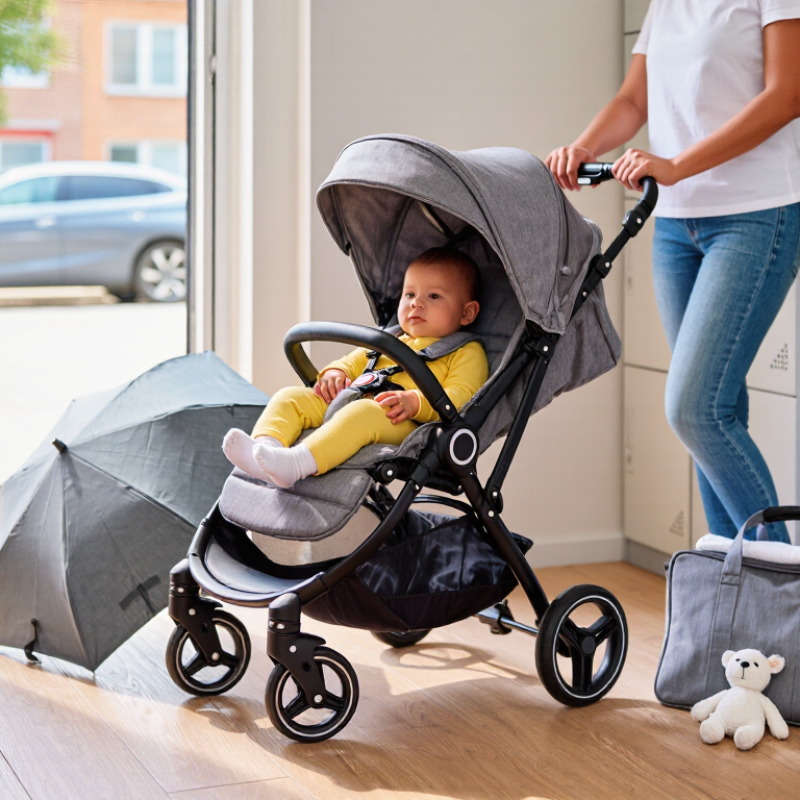
An umbrella folding pram is a lightweight stroller designed to collapse into a long, narrow shape. Its paired handles and slim folded frame often resemble an umbrella. The design makes it easier to carry through a doorway, store in a small hall, or lift into a car trunk. Check the folded dimensions before buying; “compact” can mean different things.
Most models use a simple frame, small wheels, a seat, and a harness. Many include a canopy, though its coverage varies. Some seats recline, but not all are suitable for newborns. Check the maker’s age and weight guidance, and use only a position approved for your baby. A five-point harness helps keep a seated child secure. Always apply the brake when parked.
Easy to fold. But practice at home first. A narrow frame may feel less steady on uneven paths, and small wheels can struggle with gravel or deep grass. Storage baskets are often modest, too. I have found that a pram’s real convenience depends less on its folded shape than on how smoothly it handles your daily route.
How Its Folding Design Supports Everyday Travel
An umbrella-folding pram is useful when travel involves narrow pavements, bus steps, or a crowded train. Its compact fold can make it easier to store beside a hallway wall or lift into a car boot. The process still matters: practise folding at home, with your baby safely out of the pram. Less fumbling.
The design fits increasingly urban routines. UN DESA’s 2018 World Urbanization Prospects estimated that 55% of the world’s population lived in urban areas, and projected 68% by 2050. IATA’s June 2024 passenger outlook forecast 4.96 billion air travellers that year. These figures describe the travel environment, not pram performance; they help explain why compact storage can be valuable in shared spaces.
On a travel day, a folded pram may be easier to carry through a station or place in a taxi. Check its folded dimensions against your storage space, and confirm airline or transit rules before departure. Those rules vary. A lighter frame can help on stairs, but smaller wheels may feel less steady on rough paving. I’ve found that a quick fold is only useful when the latch engages reliably, so test it before relying on it outdoors. Keep the child secured separately, and follow the manufacturer’s instructions for folding and carrying.
Practical Benefits for Parents and Babies
An umbrella folding pram can make short trips easier to manage. Many models fold into a slim shape that fits beside a hallway shoe rack or in a car boot. Their lighter frames can also help when parents need to lift a pram onto a bus or carry it up a few steps. Less bulk. That matters when one hand is holding a baby bag.
Small details shape daily comfort. A canopy can offer shade during a sunny walk, while a storage basket keeps wipes and a spare layer close by. Check how the pram folds before buying; some need two hands or a little practice. The compact shape can still feel awkward to carry, especially with shopping in the other hand. It is not magic.
For babies, a supportive seat and suitable harness help make outings more comfortable. Check the maker’s age and weight guidance, since some prams are not designed for newborns. A recline may help a tired baby rest, but it does not replace supervision. Before each walk, check that the frame locks open and the brakes work. A quick check is easy to forget when everyone is ready at the door.
Why Choose an Umbrella Folding Pram for Your Baby? — Practical Benefits for Parents and Babies
| Feature | Practical benefit | What parents should consider |
| Compact folding design | Many umbrella-folding prams collapse into a narrow shape, making them easier to store at home or take in a car. | Folded dimensions differ by model. Check the measurements against your car boot, storage space, and travel needs. |
| Convenient for everyday outings | A straightforward folding mechanism can make it quicker to pack the pram away when getting on public transport or moving between locations. | Practice folding and unfolding the specific model before relying on it during busy journeys. |
| Lightweight frame options | Some umbrella prams are lighter than larger full-size strollers, which can make carrying them up steps or lifting them into a vehicle easier. | “Lightweight” is not a standard weight category. Compare the product’s listed weight and consider whether you can lift it comfortably. |
| Useful for travel | A folded pram can be easier to handle when space is limited, such as in a car or on public transport. | Airline and transit rules vary, and a compact fold does not guarantee that a pram can be taken into an aircraft cabin. |
| Sun canopy | A canopy can provide shade and help shield a baby from direct sunlight during outings. | Canopy coverage varies. A canopy is not a substitute for appropriate sun protection, and babies should not be left in a hot pram. |
| Reclining seat options | A reclining seat may give an older baby a more comfortable position for resting while out. | Recline range varies. For newborn use, check the manufacturer’s age and developmental guidance; some models are not suitable from birth. |
| Harness and brakes | A correctly fastened harness helps keep a child seated, while the parking brake helps prevent the pram from rolling when stationary. | Use the harness as directed and engage the brake whenever the pram is parked, including on level ground. |
| Storage basket | An under-seat basket can hold small outing essentials, reducing the need to carry everything by hand. | Basket capacity and access vary. Follow the stated load limit and avoid hanging heavy bags from the handles, as this can affect stability. |
| Maneuverability | A relatively simple frame can be convenient for short trips and navigating familiar routes. | Small wheels on some models may be less comfortable on rough paths. Consider the terrain you use most often and try the pram if possible. |
Note: Features, weight limits, folding methods, and age suitability vary by model. Always follow the manufacturer’s instructions and check that the pram is appropriate for your child before use.
Safety and Comfort Features to Consider
An umbrella folding pram is convenient, but a small fold should not come at the cost of a secure ride. Look for a five-point harness that lies flat and adjusts without pinching. The buckle should click firmly, even when a wriggly baby is wearing a light jacket. Check that the frame locks open and the brake holds on a gentle slope. Check the latch. A folding joint that feels loose deserves a closer look.
Safety deserves more than a quick showroom test. A Pediatrics study by Smith and colleagues estimated 360,937 emergency-department visits for stroller- and baby-carrier-related injuries among children under five in the United States from 1990 to 2010, averaging about 17,042 visits annually. The study covered several product types and decades, so it is not a current risk estimate for one pram. Still, it makes harness use and stable handling hard to dismiss. ASTM F833 sets performance requirements for strollers, including restraint systems, brakes, and stability; check the product information for applicable compliance.
Comfort is practical, not decorative. A supportive seat, adjustable recline, and a canopy that shades without blocking airflow can help on a warm walk. Feel the handle height and push the pram over uneven pavement; a lightweight frame may rattle more than expected. Confirm the stated age and weight limits, and never assume a newborn can use an upright seat. I would also inspect the fabric seams and wheel attachments after frequent folding. It is easy to forget those small checks.
Choosing a Pram for Your Family’s Needs
Why Choose an Umbrella Folding Pram for Your Baby?
Choosing a Pram for Your Family’s Needs
An umbrella folding pram can suit families who use buses, climb stairs, or store a pram in a small hallway. Its narrow frame and compact fold may make everyday errands easier. But the smallest fold is not always the most useful. Check whether you can open and close it smoothly while holding a changing bag, and whether it fits your car boot with room to spare.
Think about where you walk most. Small wheels can feel manageable on smooth pavements, yet bumpy paths may make outings less comfortable. Try pushing the pram over a curb and turning it through a tight shop aisle. Check the seat position, canopy coverage, basket access, and handle height. A roomy basket matters when groceries replace the neat packing plan. They often do.
Your baby’s age and size matter, too. Follow the pram maker’s stated limits and guidance on suitable use, and check that the harness adjusts securely as your child grows. Test the brakes and folding latch before each outing. Not glamorous, but important. If possible, try the pram with your usual bag attached and your child seated safely. A model that feels light in a shop may feel different on a long walk.
How to read this guide: These 1–5 ratings are illustrative planning scores, not survey results or measurements. A compact fold and easy handling may matter most for families who travel or have limited storage. Pram features vary by model, so check the folded dimensions, weight, recline, age suitability and terrain guidance before choosing.