How to Choose the Best Garden Dining Set?
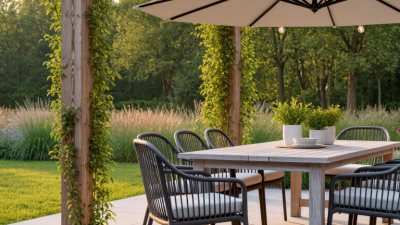
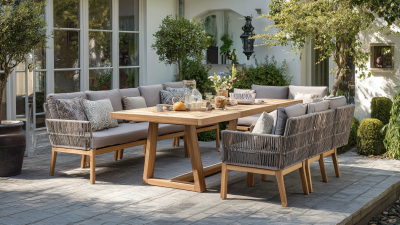
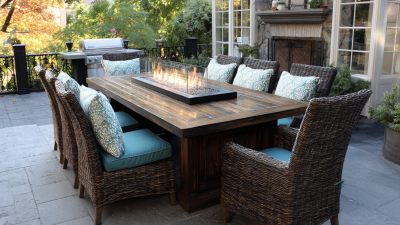
Choosing the best Garden Dining set is not just a matter of matching chairs to a patio. It means finding furniture that suits your space, your weather, and the way you actually eat outdoors. A generous table may look inviting in a showroom, then block the path to the herb beds at home. Measure the area with chairs pulled out, and leave room for people to move comfortably.
Garden designer Gertrude Jekyll wrote, “The love of gardening is a seed once sown that never dies.” Her words remind us that outdoor spaces should invite people to linger, not merely look polished. For Garden Dining, that means considering comfort alongside appearance. Sit in a chair before buying. Check whether its arms slide beneath the table, and whether cushions can be stored away when rain comes. Small details matter.
Material choice deserves a little honest thought. Teak can weather beautifully, but it still needs care; powder-coated metal is sturdy, though direct sun may make it hot. Resin wicker is lightweight, but quality varies. There is no perfect set for every garden. Even careful planning can miss something: a low evening sun, muddy shoes, or one extra guest. This guide will help you compare size, materials, comfort, and maintenance, so your choice fits the garden you have—not an idealized one.
Assess Your Garden Space and Dining Needs
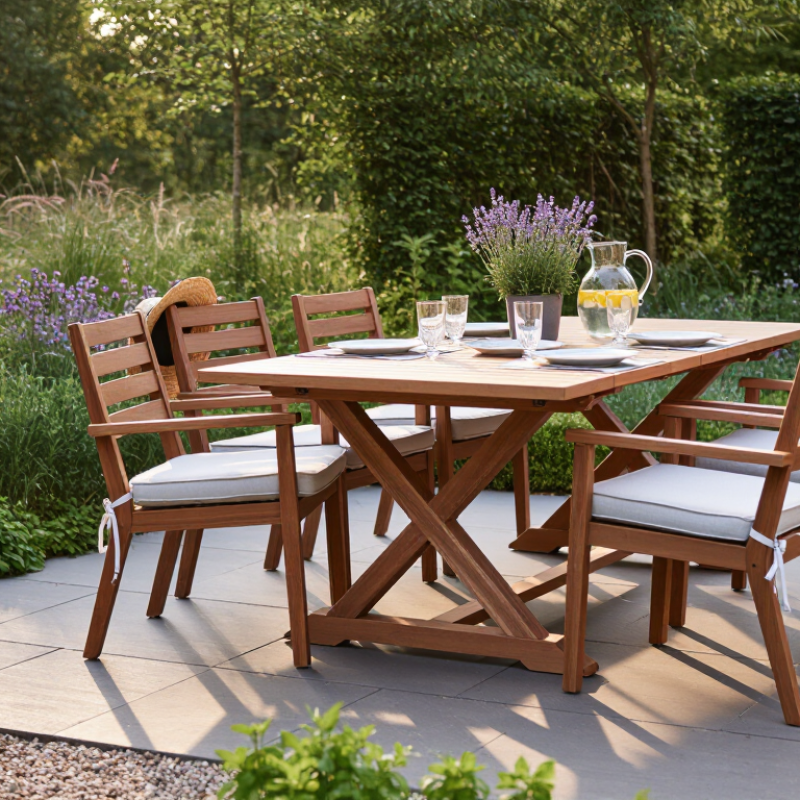
Before choosing a garden dining set, measure the area where it will sit. Include nearby doors, planters, steps, and the route from your kitchen. A table may fit neatly on paper but feel cramped once chairs are pulled out. As a practical guide, leave about 90 cm of clearance around the set where people need to walk or move their chairs. Check the ground, too; paving stones and lawns can be uneven.
Tips: Mark the table’s footprint with string or cardboard. Place a chair at each spot and pull it back as if someone were sitting down. Measure twice. Small details matter.
Think about who will use the set and how often. A couple who eats outside on quiet evenings may prefer a compact table, while regular family meals need more seats and serving space. If guests visit only occasionally, extendable furniture can help, though its larger size still needs measuring. Consider whether chairs must be carried indoors during bad weather, and whether the set will block a sunny patch or garden path. I once underestimated the space needed for serving dishes; extra elbow room would have helped.
Compare Materials for Durability and Weather Resistance
A garden dining set faces more than rain: standing water, sun-baked surfaces, and damp debris all test its materials.
The USDA Forest Products Laboratory’s Wood Handbook places the fiber saturation point of most wood species near 30% moisture content. Below that level, wood can still shrink or swell as its moisture changes. Teak and other durable hardwoods can suit exposed patios, but unfinished surfaces may weather unevenly. Check the underside, joints, and end grain, where water can linger. A small oversight: attractive tabletops often get more attention than their fasteners.
Aluminum resists rust and is easy to move, though thin frames may flex under repeated use. Steel feels sturdier, but damaged coatings can expose it to corrosion. ISO 9223 classifies first-year carbon-steel corrosion rates as 25–50 micrometres in C3 conditions and 50–80 micrometres in C4 conditions. These are atmospheric categories, not predictions of a chair’s lifespan. Stainless steel and sound drainage can help in coastal or persistently wet settings. Recycled HDPE does not absorb water like wood, but dark surfaces may become hot in full sun. Compare frame thickness, drainage holes, replaceable feet, and care requirements—not just material names. I still find this easy to misjudge: a covered patio can feel dry while water collects beneath the table.
Choose a Table Size and Seating Capacity
Before buying a garden dining set, measure the usable patio area, not just its widest point. Leave about 36 inches between the table edge and nearby walls, planters, or fences so chairs can slide back. Count the people who eat outside regularly. A table that seats six may feel cramped if everyone uses wide chairs. Measure twice.
As a practical guide, allow roughly 24 inches of table edge per diner. A 60-inch rectangular table can often seat six, while a round table around 48 inches across may suit four. Check the chair dimensions too; armrests can take up more room than expected. Shape matters. Round tables can make conversation easier in compact spaces, but they may offer less usable surface for serving dishes.
Tips: Mark the table footprint with tape, then place chairs around it. Pull each chair back as if someone were sitting down. Check the walking route to the door or grill. If the chairs block that path, choose a smaller set or fewer seats. It is tempting to buy for occasional guests, but a huge table can dominate a small patio all season. Allowing a little extra space often feels better than squeezing in one more chair.
Evaluate Comfort, Style, and Practical Features
How to Choose the Best Garden Dining Set?
Evaluate Comfort, Style, and Practical Features
A garden dining set should feel comfortable after the first ten minutes, not just look good in a photograph. Sit in each chair and check whether your feet rest naturally and the seat edge feels gentle behind your knees. Arms can make long meals more relaxing, but they need to slide beneath the table. Small detail. The American Society of Landscape Architects’ 2024 Residential Landscape Architecture Trends Survey found that 76% of respondents identified outdoor dining and entertaining spaces as popular features. That demand makes comfort worth testing, especially if your set will host frequent meals.
Match the style to your home, then test the materials against your actual weather. A pale timber table may suit a leafy patio, but it can show stains and need regular care. Aluminum is easier to move; heavier materials may stay steadier in wind. Measure the table, chairs, and the space needed to pull each chair back. Leave room for a serving dish, too. Check cushions for removable covers and ask how the frame handles rain and strong sun. I have found that showroom comfort can be misleading: firm seats may feel fine briefly, then become tiring. A practical choice should fit your space and routines, even if it is not the most striking set on display.
How to Choose the Best Garden Dining Set
Comfort, style, and practical features start with dimensions that fit your space.
Typical planning benchmarks: a dining table is about 29 inches high, a chair seat about 18 inches high, and allow roughly 24 inches of table edge per diner. Leave around 36 inches between the table edge and nearby obstacles for chair movement. Check the set dimensions against your space, since needs vary by chair design and layout.
Consider Maintenance Requirements and Budget
Maintenance can quietly reshape the real cost of a garden dining set.
Timber needs periodic cleaning and suitable protective finishes; metal frames need checks for chipped coatings and loose joints. The USDA Forest Products Laboratory’s Wood Handbook places wood’s typical fiber-saturation point near 30% moisture content. Below that point, wood can shrink as it dries, so exposed boards may need more attention through changing seasons. Resin-based materials usually need less upkeep, but still benefit from shade and routine washing. No set is maintenance-free.
Set a budget for the whole ownership period, not just the checkout price. Include covers, cleaning products, replacement feet, and possible refinishing. Check whether cushions can be removed and washed, and whether fasteners are standard sizes. A cheap set may become an expensive one if a small broken part cannot be replaced. I have learned that the overlooked details matter most after the first rainy season.
Tips: Compare care instructions before buying. Ask what parts can be replaced, and keep a little budget aside for upkeep. Store cushions indoors during wet weather. Also, measure your storage space first; I once underestimated how bulky folded chairs could be.