What Are the Top 10 Outdoor Furniture Chairs?

Outdoor Furniture Chairs do more than fill an empty patio. They shape how people eat, read, talk, and rest outdoors. A chair that looks striking in a showroom may feel stiff after ten minutes. Another may be comfortable but too heavy to move across a small deck. The best choice depends on real use, local weather, available space, and the care an owner will actually provide.

This guide compares ten popular types, from folding and stacking chairs to Adirondack, rocking, dining, and lounge designs. It considers comfort, materials, durability, maintenance, portability, and value. Richard Frinier, an American designer known for outdoor furnishings, offers a useful perspective through his work: “Treat outdoor living as an extension of home, while choosing pieces made for the elements.” This is an editorial paraphrase, not a verified direct quotation. It captures a practical test: does the chair welcome you, and can it handle sun, rain, and repeated use?

Small details matter. Check the seat depth, arm height, frame joints, and the feel of the surface against bare skin. Notice whether cushions dry quickly and whether a chair can be lifted without scraping the floor. No single ranking fits every home. A coastal balcony and a shaded garden ask different things of a chair. Some trade-offs remain, even among well-made options. The selections ahead explain where each style shines, what it asks of its owner, and which details deserve a closer look before buying.
What Are the Top 10 Outdoor Furniture Chairs?

Understanding Outdoor Furniture Chairs and Their Main Uses

Outdoor furniture chairs serve different jobs, and comfort depends on matching the seat to the setting. An upright dining chair supports meals at a patio table. A low lounge chair suits reading beside a pool, while a folding chair is useful when guests arrive unexpectedly. A rocking chair can make a shaded porch feel restful. Small details matter: armrests help when standing, and breathable mesh feels cooler on a warm afternoon. Check the seat height against your table. It is easy to overlook.

Market reports show the scale of outdoor furnishing, but they do not measure chair sales alone.

Grand View Research estimated the global outdoor furniture market at $50.5 billion in 2023, projecting 5.6% annual growth from 2024 to 2030.
Allied Market Research valued the market at $48.4 billion in 2021 and projected $77.6 billion by 2031.

Their estimates differ, partly because report periods and market definitions vary. That distinction matters. For everyday use, consider weather exposure, storage space, and how long people actually sit outside. A chair may look inviting in a photograph, yet feel too rigid after one long dinner.

Criteria for Comparing Outdoor Chair Styles

Comparing ten outdoor chair styles starts with their intended setting. A balcony dining chair faces different demands from a deep lounge seat. Measure the available space, including room to pull chairs back from a table. Fit matters. A wide armchair may feel inviting but crowd a narrow deck.

Check frame stability, seat height, and drainage. Sit in each style for several minutes, rather than judging by appearance alone. Notice whether the seat edge presses behind your knees and whether the back supports you without forcing an awkward lean. A quick showroom sit can still mislead; cushions and posture change during longer use. No single shape suits everyone.

Material choices affect upkeep and comfort. Mesh and slatted seats let rain pass through, while solid surfaces may need wiping after a shower. In strong sun, dark materials can become hot, so consider shade and surface temperature. Ask how cushions dry and whether covers can be removed. Compare folding or stackable designs if storage is limited. A firm seat may feel supportive to one person and unforgiving to another, so comfort scores deserve a little skepticism. Check joints and feet for wobble on the kind of paving where the chair will actually stand.

Ten Popular Types of Outdoor Furniture Chairs

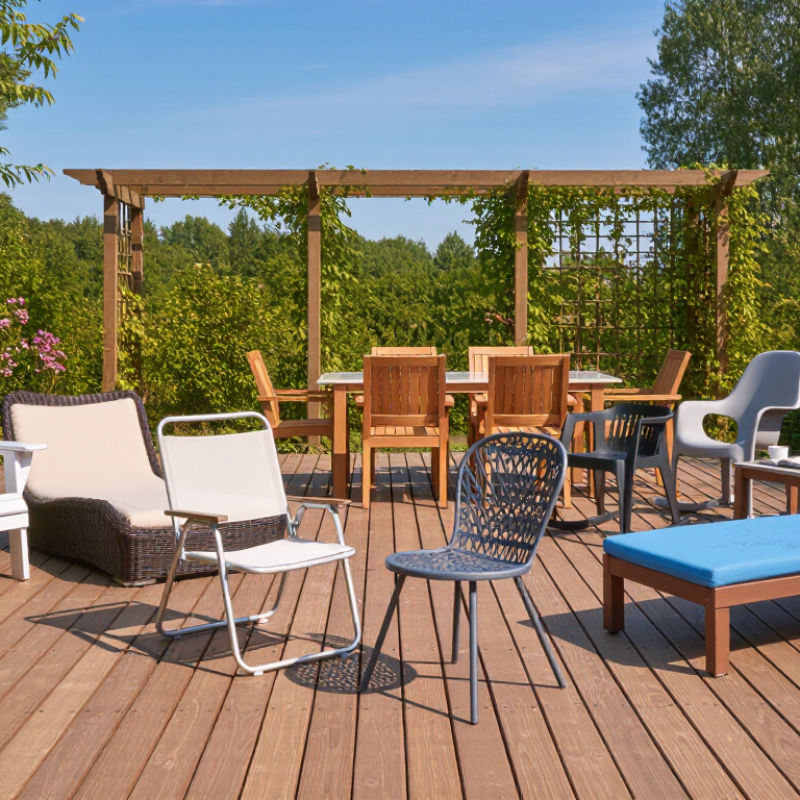
Outdoor furniture chairs suit different spaces and habits. Adirondack chairs have wide arms and a reclined seat, ideal for slow evenings on a deck. Dining chairs sit more upright, making meals easier. Folding chairs store neatly when guests leave. Rocking chairs add gentle movement to a porch. Lounge chairs recline for sunbathing or reading. Comfort depends on fit, not just appearance.

Sling chairs use taut fabric that dries quickly after a light shower. Bistro chairs bring compact café-style seating to balconies and small patios. Swivel chairs make conversation easier around a table. Stackable chairs save floor space in sheds or garages. Egg chairs create a sheltered nook, though their larger frames can crowd a narrow patio. Ten styles, many trade-offs.

Tips: Measure the space before buying, including room to pull out a chair. Check cushions for removable, quick-drying covers, and choose sturdy frames suited to outdoor exposure. I sometimes underestimate how much space chairs need once people sit down. Leave a clear walking path, and test the seat height with your table if possible. A chair may look perfect, yet feel awkward after dinner.

Materials and Features That Shape Comfort and Durability

Outdoor chair comfort depends on more than a thick cushion. Seat depth, back angle, and arm height decide whether a chair feels relaxed or awkward after ten minutes. Textilene-style mesh or woven outdoor fabric allows airflow, which helps on humid afternoons. But tight, unforgiving mesh can press against the thighs. Sit in a chair before buying, if possible. Small details matter.

Frame materials shape maintenance and lifespan. Aluminum is light and resists rust, though thin tubing may flex under load. Teak and other durable hardwoods feel warm, but need cleaning and may weather unevenly. The USDA Forest Products Laboratory’s Wood Handbook notes that wood-decay fungi generally need moisture content above about 20 percent; drainage and drying therefore matter. The Grand View Research outdoor furniture market report estimated the global market at $52.03 billion in 2023, reflecting broad demand but not proving any chair will last. Check joints, welds, fasteners, and replaceable glides. A smooth finish is not enough. I would be cautious about assuming “all-weather” means maintenance-free; that wording can hide real differences in exposure, storage, and care.

Choosing Chairs for Different Outdoor Spaces

Choosing Chairs for Different Outdoor Spaces

The right outdoor chair depends on how people use the space and how much room it offers. On a narrow balcony, folding or stackable chairs leave space for walking and watering plants. Measure twice. A small bistro chair can still feel cramped if its legs block the door.

For a dining patio, choose stable chairs with seats that slide easily beneath the table. Metal and resin frames are often simple to clean, while wood may need periodic care. In a garden, Adirondack or rocking chairs suit slower, quieter breaks. Deep lounge chairs work well beside a pool, but check that their cushions dry promptly after rain. Shade matters. A chair that feels comfortable at noon may become unpleasant in direct sun.

Tips: Before buying, measure the seating area and check the chair’s width, height, and weight. For windy or exposed spots, look for sturdy construction and weather-suitable materials. Try sitting in the chair if possible; product photos rarely show whether the seat edge presses behind your knees. I sometimes underestimate that detail.

What Are the Top 10 Outdoor Furniture Chairs? - Choosing Chairs for Different Outdoor Spaces

Chair type Best outdoor space Common materials Main advantages Things to consider Care notes
1. Adirondack chair Porches, lawns, fire-pit areas, and lakeside settings Wood, recycled plastic, or molded resin Wide arms and a reclined seat suit relaxed lounging; many versions are sturdy and easy to recognize. The low seat can be difficult for some people to get in and out of; wide arms need extra space. Clean periodically; follow the material’s care instructions. Wood may need refinishing over time.
2. Folding patio chair Small balconies, camping, and flexible seating areas Powder-coated steel or aluminum with fabric or plastic Folds for compact storage and is easy to move or bring out for guests. Comfort and long-term durability vary; check that hinges lock securely before use. Dry before storing. Keep hinges clean and check them periodically for wear or corrosion.
3. Stackable dining chair Patios and outdoor dining areas Aluminum, steel, resin, or textilene fabric Designed for upright dining; stackable styles save storage space when not in use. Confirm seat height works with the table and that stacked chairs remain stable. Wash with mild soap and water; avoid abrasive cleaners on coated finishes.
4. Sling lounge chair Poolside areas, decks, and sunny patios Aluminum or steel frame with outdoor mesh fabric Breathable fabric dries relatively quickly and often needs no separate cushion. Fabric tension and recline options differ; mesh can wear or stretch with prolonged exposure. Rinse off pool chemicals or salt residue and allow the chair to dry fully.
5. Rocking chair Covered porches and sheltered patios Wood, metal, or weather-resistant resin Gentle rocking adds a relaxing motion and makes a porch feel inviting. Needs a level surface and enough clearance for the rocking arc; moving parts require inspection. Check runners, joints, and fasteners regularly; protect wood from standing water.
6. Zero-gravity recliner Gardens, balconies, and lounging areas Metal frame with woven synthetic fabric Adjustable recline and a supportive, suspended seat make it suitable for extended relaxation. Takes more room than a standard chair; inspect the locking mechanism and cords or fabric. Keep the frame and joints clean, and store under cover during prolonged bad weather.
7. Wicker-style lounge chair Covered patios, garden seating groups, and balconies Woven synthetic resin over a metal frame; natural wicker is best sheltered Textured appearance pairs well with cushions and coordinated outdoor furniture. Woven material can trap debris; natural fibers are less suited to frequent rain and direct exposure. Brush or rinse away debris. Dry cushions and store them in a dry place when not in use.
8. Bistro chair Compact balconies, courtyards, and small café-style patios Metal, wood, or woven outdoor materials Compact proportions work well in smaller spaces and around a small dining table. Usually offers less room to lounge than a deep-seat chair; check the footprint before buying. Wipe clean and protect metal finishes from scratches that could expose the underlying surface.
9. Papasan-style chair Covered decks, spacious balconies, and sheltered garden rooms Rattan or synthetic wicker frame with a removable cushion Deep, rounded seating creates a comfortable spot for casual lounging. Has a large footprint; cushions need protection from rain and may take time to dry. Use outdoors only if the frame and cushion are rated for outdoor conditions; store cushions indoors when wet weather is expected.
10. Garden bench-style chair Garden paths, lawns, and shared seating areas Wood, metal, or recycled plastic A broad seat can accommodate more than one person and creates a simple focal point in a garden. Less individually supportive than a chair with a contoured back; needs stable, level placement. Remove leaves and dirt regularly; inspect joints and protect wood according to its finish.

Note: These are general chair categories. Materials, comfort, weather resistance, and care requirements vary by design and construction.