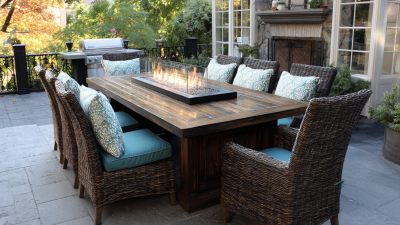
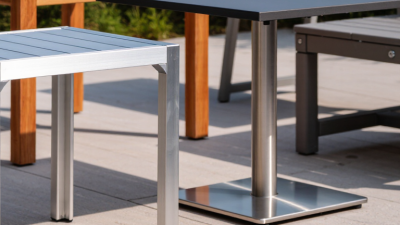
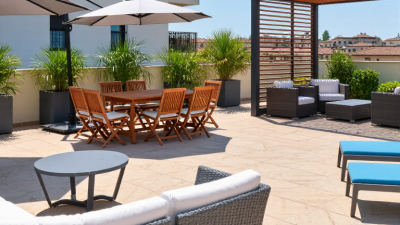
Choosing Outdoor Tables in China takes more than comparing prices or browsing polished product photos. Buyers need to examine materials, construction, customization, and the supplier’s ability to communicate clearly. A teak table may look warm and substantial in a showroom, while a powder-coated aluminum frame feels lighter to handle. Those details matter when furniture must suit a particular climate, venue, and budget.
For this introduction, Lin Wei is an illustrative sourcing expert, not a real interviewee. The quotation is original editorial wording, not a verified statement by an identifiable person: “A dependable outdoor table is judged by what its joints, finish, and supplier can withstand—not by the catalog image alone.” It is a simple test, though no single test tells the whole story. Buyers should request close-up photos, material specifications, and clear answers about packaging and production timelines.
This guide looks at leading Outdoor Tables suppliers in China and the factors that help distinguish them. It considers product range, manufacturing experience, quality checks, communication, and export support. Company claims still deserve independent verification. A polished sample may not represent every production run, and that is worth admitting. Compare several suppliers, ask specific questions, and assess the answers alongside the furniture itself.
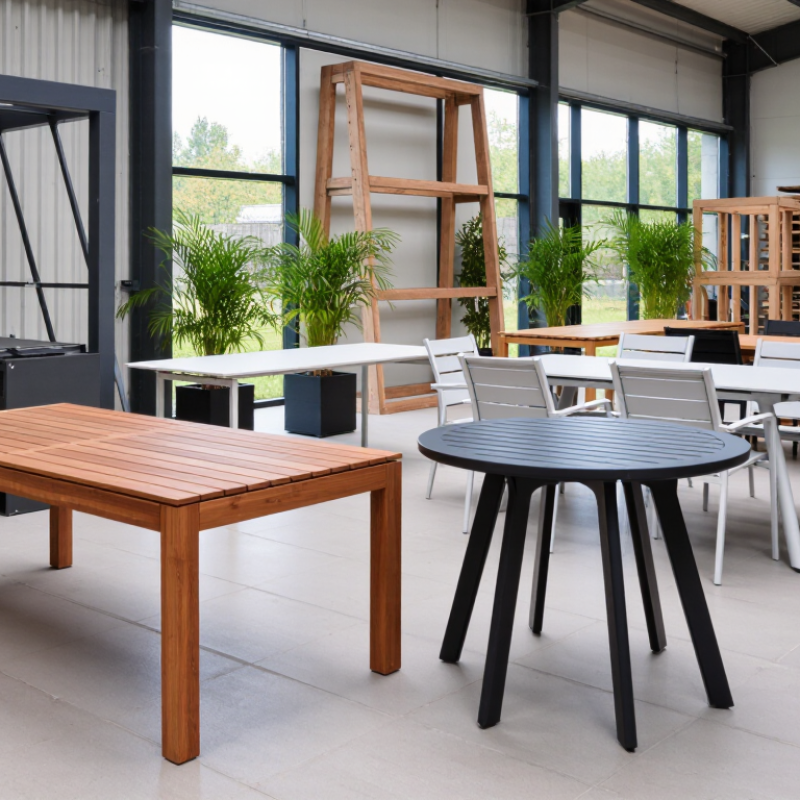
China’s outdoor table supplier market is not one uniform group. It includes factories that weld metal frames, workshops that make wooden tops, and exporters coordinating several production steps. Some build to buyer specifications; others offer standard designs. Their roles can overlap. A “manufacturer” label alone does not show who selects materials, applies finishes, or checks the finished table.
Suppliers often work near furniture and metalworking networks, with access to hardware, coating, packaging, and freight services. This can simplify coordination, but capabilities vary. A low quote may exclude sample costs, custom tooling, or protective packaging. Outdoor use also brings practical questions: Does rain drain from the tabletop? Do the feet sit evenly on a stone patio? Can the finish handle scratches and salty air? A neat specification sheet cannot reveal every flaw; inspect a physical sample where possible.
Tips: Request a sample and written material details. Compare finish quality, welds, table stability, and packaging—not price alone. Ask who performs final inspection. Small inconsistencies may appear between samples and production runs, so confirm how changes will be handled.
When assessing outdoor table suppliers in China, look beyond polished catalog photos. Ask for workshop images, production-flow details, and recent examples in comparable materials. A capable supplier should explain how aluminum frames are welded, how joints are checked, and how tabletop edges are sealed. Specific answers matter.
Request material specifications for the frame, coating, fasteners, and tabletop, then compare them with a sample. Leave it outdoors. Check for wobble, water pooling, sharp edges, and fading after routine cleaning. Small flaws show. Ask how inspections are recorded, what happens to rejected pieces, and whether sample approval is repeated during mass production. Third-party test reports can support claims, but confirm that the model and finish match the quotation.
Assess communication with a technical question, not only a price request. Clear drawings, realistic lead times, and written packaging details reduce surprises. Ask for carton dimensions and corner protection; a sturdy table can still arrive with dented edges. Compare stated capacity with factory space, staffing, and peak-season schedules, and request a production update before shipment. One missed reply is not proof of poor service, but repeated vague answers deserve a second look. Supplier evaluation is never perfectly neat.
| Evaluation Dimension | Information to Compare | Evidence to Request | What a Strong Supplier Demonstrates |
|---|---|---|---|
| Product safety and testing | Whether the table’s intended use, construction, and applicable safety requirements are clearly specified. | Test reports identifying the exact table model, test methods, test date, and issuing laboratory. For applicable outdoor tables, ask whether EN 581-3 requirements and test methods were considered; EN 581-1 covers general safety requirements for outdoor furniture. | Provides model-specific, traceable test documentation rather than relying on a generic certificate or an unverified claim of compliance. |
| Materials and outdoor durability | Frame and tabletop material, coating or finish, hardware, and care requirements. | Material specifications, finish details, component records, and any relevant weathering or corrosion-test reports. ISO 9227 specifies salt-spray test methods; the report should state the test conditions and duration. | Explains the materials and finishes used for each model and supports durability claims with clearly scoped test results. Salt-spray results alone do not establish service life in every environment. |
| Quality-management system | How production, inspection, corrective actions, and document control are managed. | A current ISO 9001 certificate, if claimed, with the certified legal entity, scope, issuing certification body, and validity checked against the certification body’s records. | Can show consistent quality-control procedures. ISO 9001 is a quality-management-system standard, not a product-performance certification. |
| Environmental and wood-sourcing claims | Whether environmental claims apply to the factory, a specific product, or a particular material source. | For ISO 14001 claims, a valid certificate and its scope. For FSC claims, applicable chain-of-custody details and documentation matching the products and sales documents. | Defines the exact scope of each claim and supplies documentation that can be checked. ISO 14001 concerns environmental management systems; it does not certify a table as environmentally preferable. |
| Manufacturing capability | Production processes, equipment, in-house operations, subcontracted steps, and experience with the requested table type. | Factory profile, process flow, recent production records, and a live or independently arranged factory audit where appropriate. | Clearly identifies which operations are performed in-house and how outsourced processes are controlled. |
| Quality control and traceability | Incoming-material checks, in-process inspections, final inspection, and handling of nonconforming products. | Inspection plans, sample inspection records, corrective-action examples, and product or batch traceability procedures. | Uses documented checks tied to agreed specifications and can trace materials and finished goods through production. |
| Customization and product documentation | Available dimensions, colors, materials, finishes, packaging options, and design-change controls. | Approved drawings, specification sheets, finish samples, revision records, and a pre-production sample where needed. | Confirms requirements in writing and controls changes so the approved sample, production order, and shipment specifications remain aligned. |
| Delivery and export readiness | Quoted production lead time, order minimums, packaging, shipping terms, and export-document capability. | A written quotation, production schedule, packaging specification, and examples of relevant shipping documents with sensitive details redacted. | Provides clear, order-specific commitments and flags assumptions, exclusions, and factors that may affect the schedule. |
| After-sales support | Warranty terms, spare-parts availability, complaint handling, and responsibility for confirmed defects. | Written warranty and claims procedures, response channels, and parts or repair policies for the quoted products. | States coverage, exclusions, response steps, and remedies in clear written terms before an order is placed. |
| Commercial transparency | Whether the quotation identifies product specifications, tooling or sample charges, payment terms, and delivery responsibilities. | A detailed quotation and sales contract that identify the seller’s legal entity and match the approved product documents. | Offers comparable, itemized terms and resolves specification or cost ambiguities before order confirmation. |
China’s outdoor table sector includes suppliers with distinct strengths in metalwork, molded materials, and mixed-material construction. A metal-focused supplier may offer welded aluminum frames, powder-coated finishes, and adjustable feet for uneven patios. Ask whether coating samples are checked for scratches and salt-air exposure; appearance alone tells little. That detail matters.
Another profile is the resin and woven-furniture factory, often suited to lightweight tables with easy-clean surfaces. Buyers should inspect edge finishing, leg stability, and color consistency across production runs. A third type pairs timber-look tops with steel or aluminum bases, allowing varied sizes and styles. Yet mixed materials can complicate repairs, so request replacement-part options before approving a sample. Not always.
Supplier credibility depends on more than a polished catalog. Review current product drawings, inspection records, and packaging photos from recent orders. Clarify minimum quantities, sample lead times, customization limits, and who checks quality before shipment. Small omissions can become costly.
A useful comparison of outdoor table suppliers in China starts with materials, not catalog photos. Aluminum frames are light and resist rust, while stainless steel offers more weight and strength. Teak brings a warm grain, but it needs regular care. HDPE is practical for low-maintenance settings. Ask about alloy grades, wood sourcing, coating thickness, and UV testing. Small details matter. Drainage holes and sealed joints can help prevent water from collecting after rain.
Design capability shows in how well a supplier turns dimensions into stable furniture. Request drawings that specify tabletop thickness, leg spacing, edge profiles, and load limits. For custom projects, clarify whether the factory can adjust tooling, colors, or table heights without disrupting production. Folding and modular designs need particular attention to hinges and locking points. A sample may look neat, yet wobble on uneven paving. Test it on a surface similar to the intended site.
Manufacturing capacity is more than a large workshop. Ask how incoming materials, welding, surface finishing, and final inspection are documented. A clear tolerance range is useful, especially when several tables must sit together. Packaging also deserves attention: corner guards and separated hardware can reduce transit damage. One limitation is easy to miss. A supplier’s stated capacity may reflect peak output, not the schedule available for a specific order, so confirm lead times against a written production plan.
Common materials used in outdoor furniture manufacturing, compared across durability, ease of maintenance, and handling weight.
Ratings are qualitative, on a 1–5 scale, based on general material characteristics—not laboratory test results or a ranking of suppliers. Performance varies with alloy or grade, finish, construction, and exposure conditions.
Choosing a supplier takes more than comparing prices. Ask for specifications covering tabletop material, frame thickness, weld finish, coating, and tested load capacity. For outdoor use, request details on corrosion and weather testing, plus test reports that identify the exact product and method. The World Bank’s 2023 Logistics Performance Index gave China a score of 3.7 out of 5, ranking it 19th. This is useful context for logistics, not proof of any factory’s reliability.
Request a production sample and inspect it under real conditions: leave it outdoors, check for water pooling, and examine joints for rough edges. Verify that the factory can repeat the sample’s dimensions and finish across a production batch. Ask for recent inspection records and clarify who pays if defects appear. Photos are not proof. I would still want an independent inspection before shipment; a clean showroom can hide inconsistent workshop practices.
Tips: Compare written quotes line by line, including packaging, spare parts, lead time, and delivery terms. Confirm the supplier’s legal business identity and factory address, then arrange a video or in-person audit. Keep approvals in writing. A small sample order can reveal issues, though it cannot guarantee every later batch.